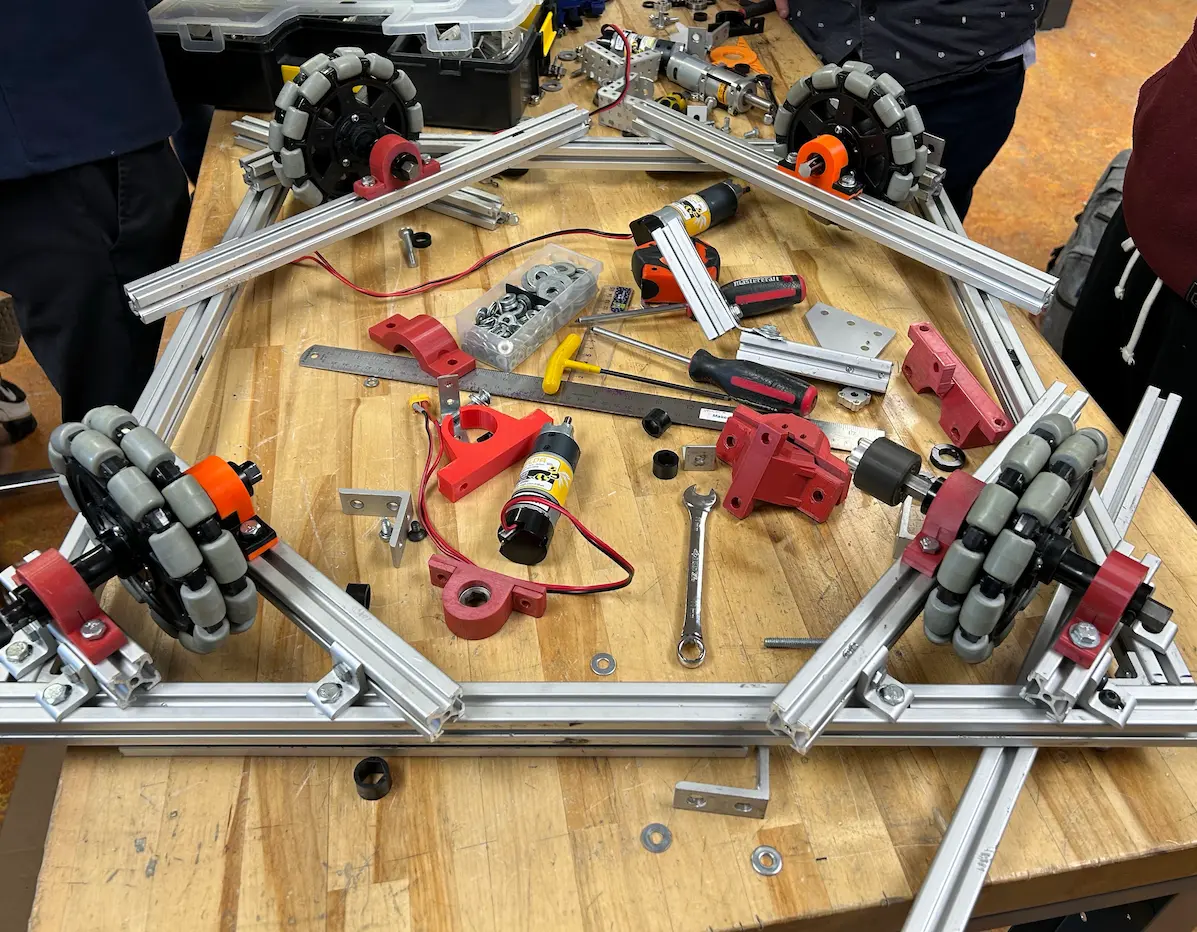
Vanier Robotics: Lessons & Failures in First-Time Leadership
In CEGEP, the robotics room was my life. During my first year, I grinded for hours and dedicated everything to the team.
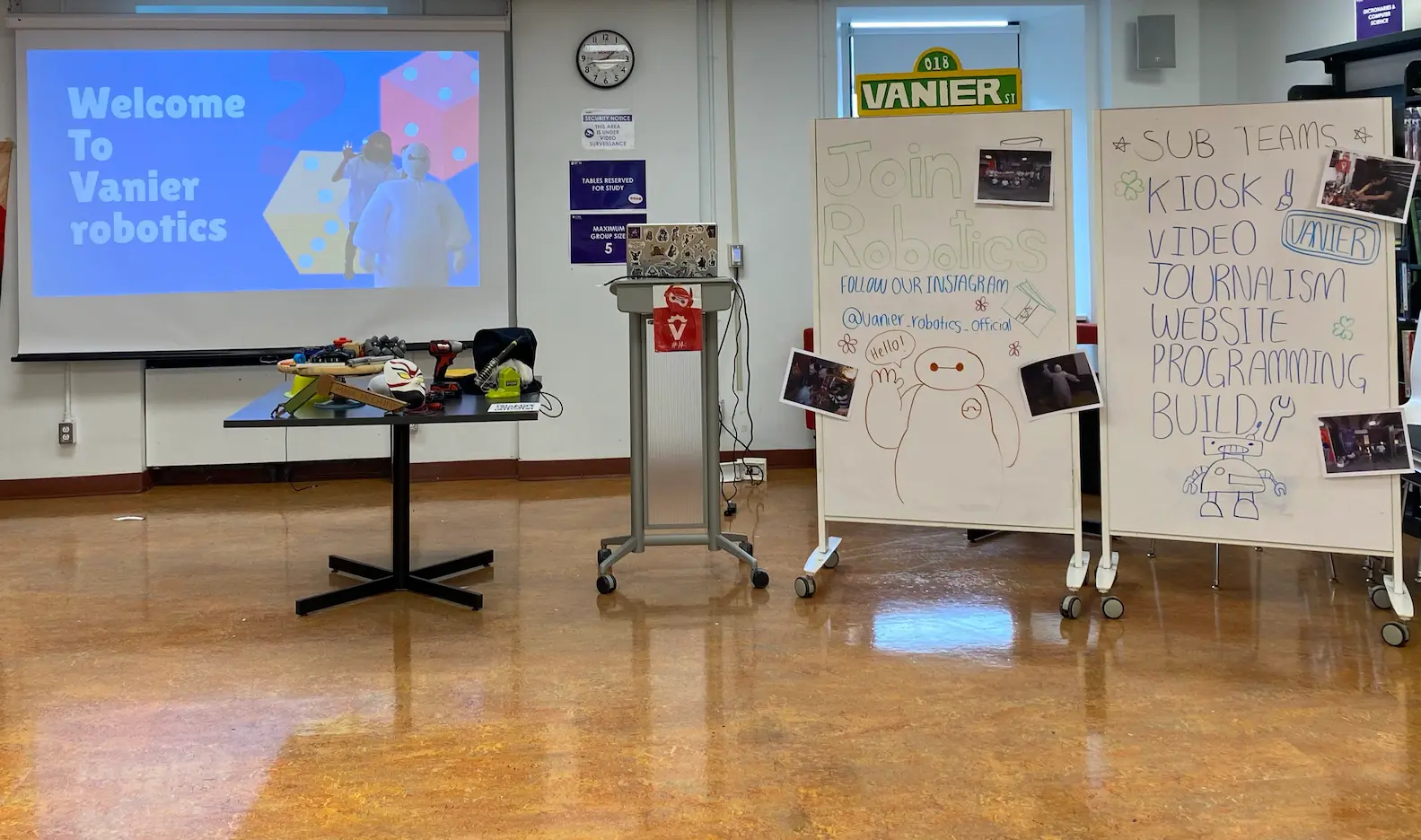
I was really involved in the team. I had around ~50 solid friends on the team; these relationships were precious to me. By the second year, I was the Team Captain.
I had one goal: Gold. I pushed for excellence. I wanted us to win.
I remember I had so many ideas and new things I wanted to implement. We changed the sub-team structure and made many other crucial changes, like getting external sponsors.
The Wins
Trying to get external sponsors actually taught me a lot. I had to write up a sponsorship document and build up the courage to go talk to strangers, send emails, do cold calls, and go door-to-door in a mall.
- Result: We secured seven sponsors.
Other than that, we did a full renovation of the robotics room and changed the way our kiosk was assembled. Overall, I think these changes made the team more effective.
The Problems
Near the end of my first semester as captain, there was a sub-team working on a specific creative component of our project. We disagreed on the quality of the work... Tension started rising.
I personally didn't think the work met the standard of quality we needed to win. Unfortunately, the way I handled things cost me a lot more than a trophy.
The 11 PM Mistake
Instead of handling it like a leader, I handled it like a rookie.
It was exam season. I was stressed and a little angry. Late at night, I sent a "ping" to the entire team group chat to demand feedback on the sub-team's work.
I thought I was saving the project. In reality, I was starting a mutiny.
It was near midnight, and we started arguing online. We eventually called it a night and went to bed.
The next morning, I woke up to silence. I checked the friend group chat (the one with my closest robotics friends). I couldn't find it.
They hadn't just argued with me; they had kicked me out without a word.
The Elephant in the Room
At this point, I could tell things were getting really bad really fast. I had no group chat access, and because everyone was at home studying for tests I couldn't just talk to them in person.
I reached out to a few people to make things right. The specific sub-team captain wasn't ready to talk, but things seemed to cool down a bit.
So, I did the worst thing possible: I waited.
I let the silence fester. I backed off. I told myself I couldn't see them because of exams, but deep down, I was scared.
A few days later, there was a mandatory robotics meeting. All the captains were there. I had a clear shot. All I had to do was stand up, look them in the eye, and say something like:
"I messed up. I shouldn't have done that. I'm sorry."
It would have taken 30 seconds. Instead, I avoid confrontation.
Because I stayed silent, the anger in the group didn't dissolve; the weird tension remained. I spent the rest of the semester half-alienated from the people I cared about most. I lost trust. I lost control.
The Result
- We hit 3rd place overall – good, but I knew we could have won the whole thing.
- I lost a bunch of friends along the way.
- What was supposed to be a fun experience turned into a stressful job.
The Protocol: How to Avoid a Mutiny
1. The Angry Boat Theory
There can only be one person in the "Angry Boat."
If they are mad at you, you cannot be passive. You must be more angry at yourself than they are. If I had come in the next day and said, "I can't believe I sent that, I'm an idiot, I'm so sorry," they probably would have understood. By being defensive (or silent), I kept the fight alive.
2. The Midnight Rule
- Never send a message when you are angry.
- Never send a message after 10 PM.
- If you break this rule, you aren't thinking clearly. Go to sleep.
3. Speed Kills (in a good way)
The longer you wait to apologize, the harder it gets. I waited 5 days. I should have fixed it in a few hours. You must address the Elephant in the Room immediately.
4. The Friend Filter
This experience hurt, but it was clarifying. Out of 30 "friends," only two people reached out to me during my low point. You find out who your real friends are when you aren't on top.
Conclusion
To this day, thinking about this experience still hurts, though I have mostly moved on.
I’d like to believe everything happens for a reason. That isolation made me angry. And that anger gave me the drive to work harder and level up faster than I ever would have otherwise.
I could have talked about all the things I did right, but honestly I learned so much more from the few things I did wrong. Failure is the ultimate teacher. tbh, out of my entire two years of CEGEP, I'd say this one experience taught me the most. Much more than any class.
If I had to restart, of course I'd do things differently, but then I wouldn't have learned the lesson. So in the end, I can't be too bitter about how things turned out.
I paid a high price for this lesson. Hopefully, you don't have to.