Robot Arm
During my final semester in CEGEP, I was challenged to create a 3D object that represented my field of study.
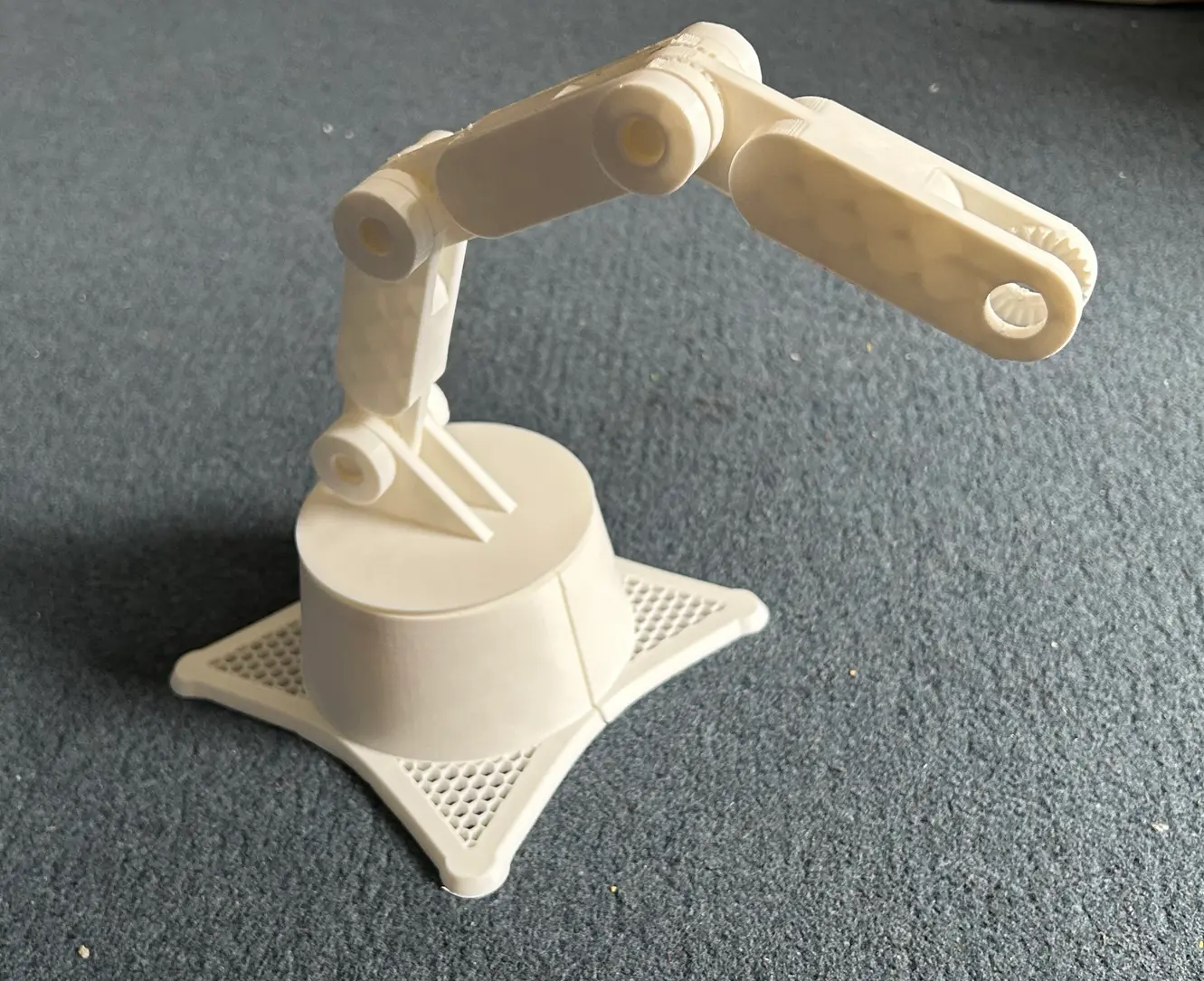
Since I was in Pure & Applied Science (and I love robotics), I decided to engineer a fully functional 3D Printed Robot Arm.
This wasn't just a static model: I wanted something that could move, lock in place, and actually hold objects.
The Gravity Base Design
The first engineering challenge was stability. A long arm creates a massive lever arm, meaning the center of gravity shifts dangerously as it extends.
To prevent it from toppling over, I designed a hollow base specifically sized to house a standard laboratory physics weight. This added the necessary mass without wasting hours and filament for a solid plastic base.
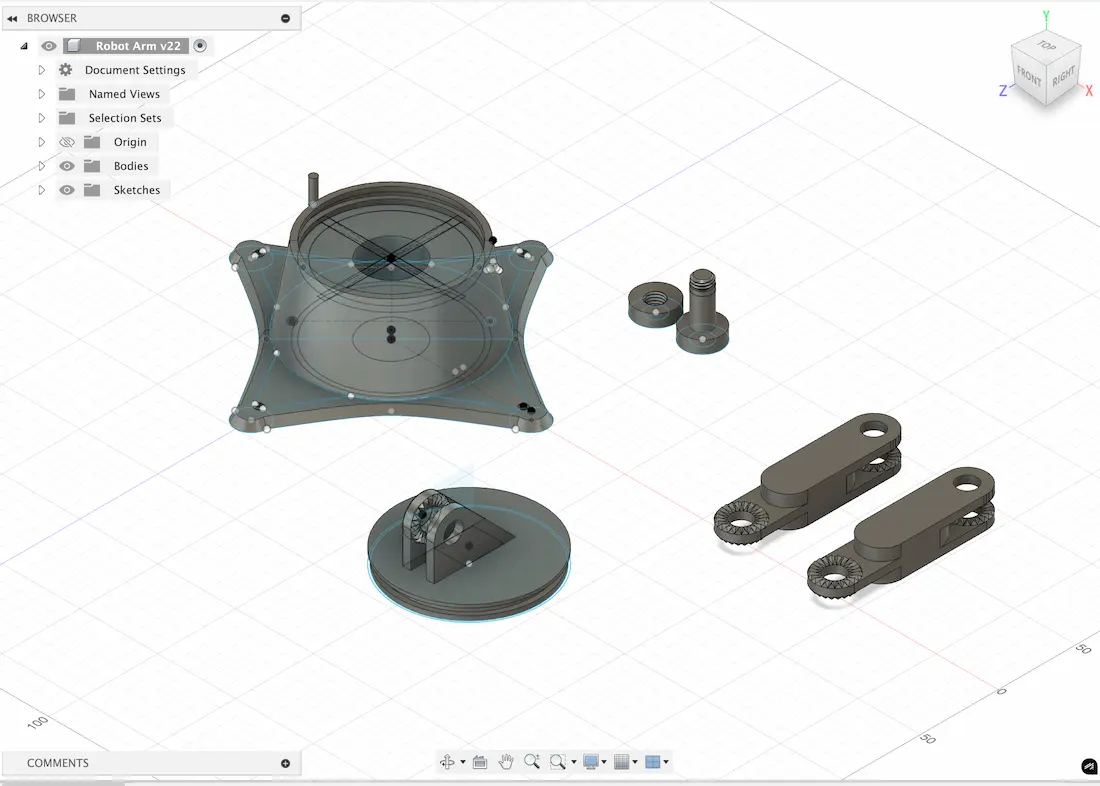
I designed the base as a two-part snap-fit assembly.
- The internal turntable ring slides into the bottom half.
- The top half snaps over it, trapping the ring in a track.
- Plastic extrusions lock the entire assembly together, creating a smooth 360° rotational axis. 🔥
The Ratchet Joint System
To make the arm articulate without expensive motors, I designed a custom friction-lock system.
I took inspiration from camera lens mounts and Hirth joints. I modeled rings with interlocking triangular teeth. When clamped together, they lock the arm rigidly at specific angles. When loosened a little, they "click-clack" to the next position.
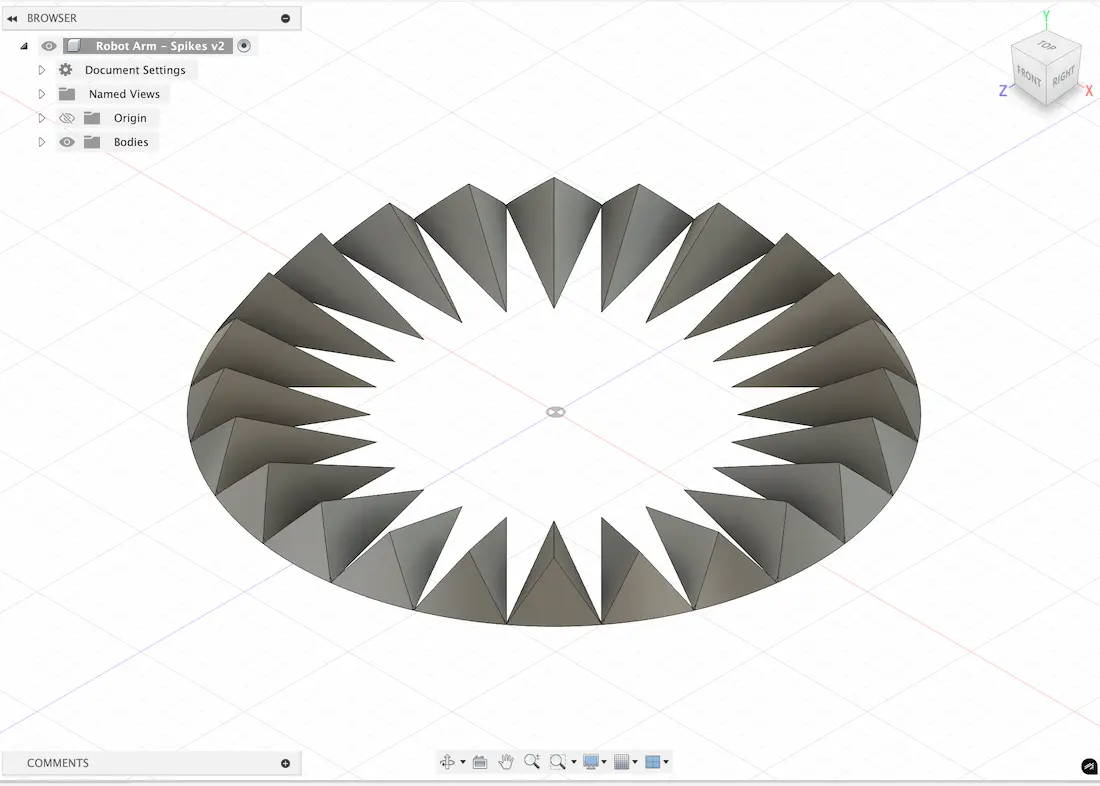
While plastic-on-plastic friction does degrade over time, for a prototype it worked perfectly. It holds the arm's weight easily without sagging.
Assembly & The Claw
I printed three primary arm segments to maximize reach without reducing structural integrity. Any longer, and the plastic's flexibility would have introduced too much wobble.
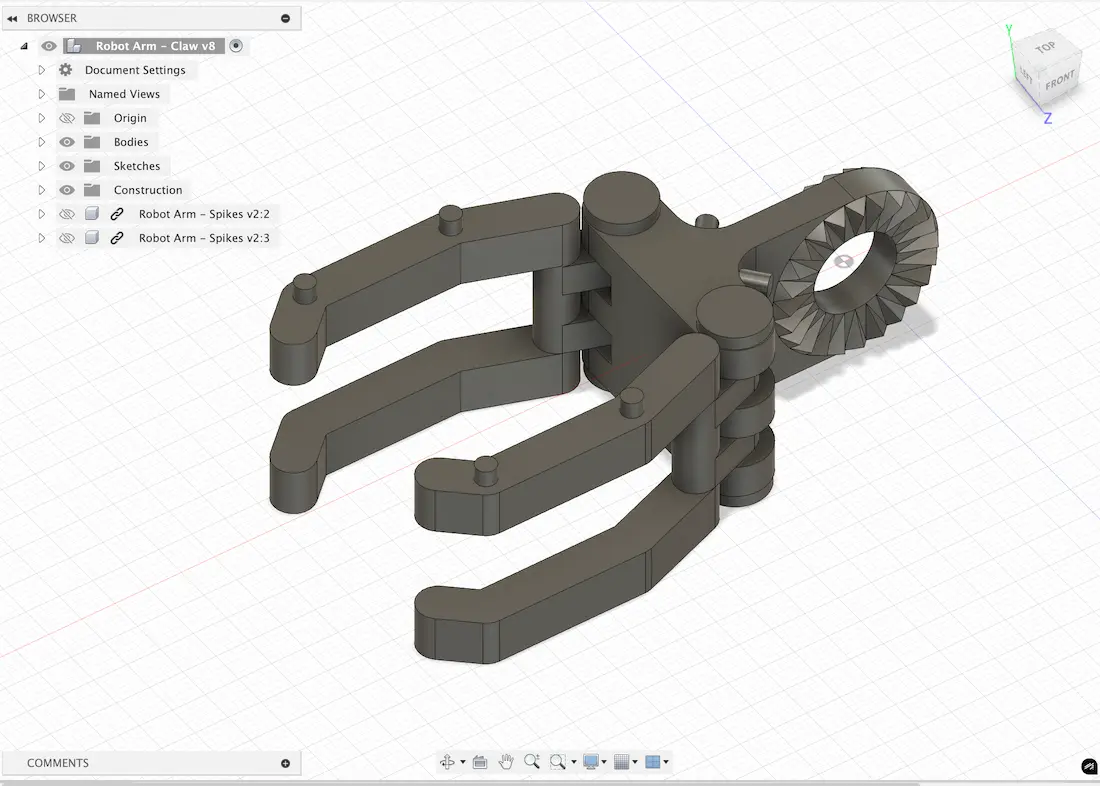
For the end effector (the hand), I ran into the classic engineer's enemy: Time.
I had to simplify the design. It’s a basic two-finger claw that uses a rubber band to generate clamping force. It’s not the complex gripper I envisioned, but it works.
Final Result
Despite the rush on the hand, the arm is a success. The weighted base keeps it planted, the ratchet joints hold their angles, and it can successfully hold small objects.

This project definitely helped me improve my CAD skills. Designing the tolerances for snap-fits was especially rough. 😅